How Much Does Shopify Development Cost in India
Since we’re based in Mumbai and work closely on Shopify projects, we’ve seen how widely pricing can vary depending on who you choose to work with.
If you hire freelancers or individual Shopify experts, a basic store generally starts in the range of ₹40,000 – ₹60,000.
However, when you work with a specialized shopify agency india, a well-built, growth-focused store typically falls between ₹80,000 – ₹1,50,000+, depending on the level of customization, integrations, and overall project scope.
In contrast, hiring developers from the USA for a similar Shopify store can push costs significantly higher — often reaching ₹8–10 lakh or more for comparable work.
Table of Contents
- What Does Shopify Development Actually Cost in India?
- Why Shopify Pricing Varies So Much
- Cost Breakdown Based on Store Complexity
- What You’re Really Paying For (Beyond Development)
- Hidden Costs Most Brands Don’t Consider
- Cheap vs Strategic Investment: What’s the Difference?
- How to Budget Smartly for Shopify Development
- Final Thoughts: What Should You Expect to Invest?

What Does Shopify Development Actually Cost in India?
If you’re trying to figure out Shopify pricing, you’ve probably seen numbers all over the place — ₹20,000 on one side, ₹10 lakhs on the other.
Both are correct.
The reality is, Shopify development cost in India depends entirely on what you’re trying to build, the stage of your business, and how much you’re planning to scale. A simple store built to test an idea will naturally cost far less than a fully customized, performance-driven ecommerce engine designed for growth.
From our experience as a shopify agency india, most serious ecommerce brands typically fall within these ranges:
- Basic store: ₹50,000
- Standard D2C store: ₹50,000 – ₹2,00,000
- Custom / advanced store: ₹2,00,000 – ₹10,00,000+
These ranges align with current market benchmarks, where entry-level setups stay lean, while advanced builds expand based on design depth, integrations, and overall functionality. The more tailored your requirements whether it’s custom UI/UX, automation, or third-party integrations the more the investment scales.
It’s also important to understand that pricing isn’t just about features it’s about outcomes. A store built for conversions, speed, and scalability will always require a different level of investment compared to a basic setup.
So the real question isn’t “how much does it cost?”
It’s what level of store are you building and what do you expect it to do for your business?
Why Shopify Pricing Varies So Much
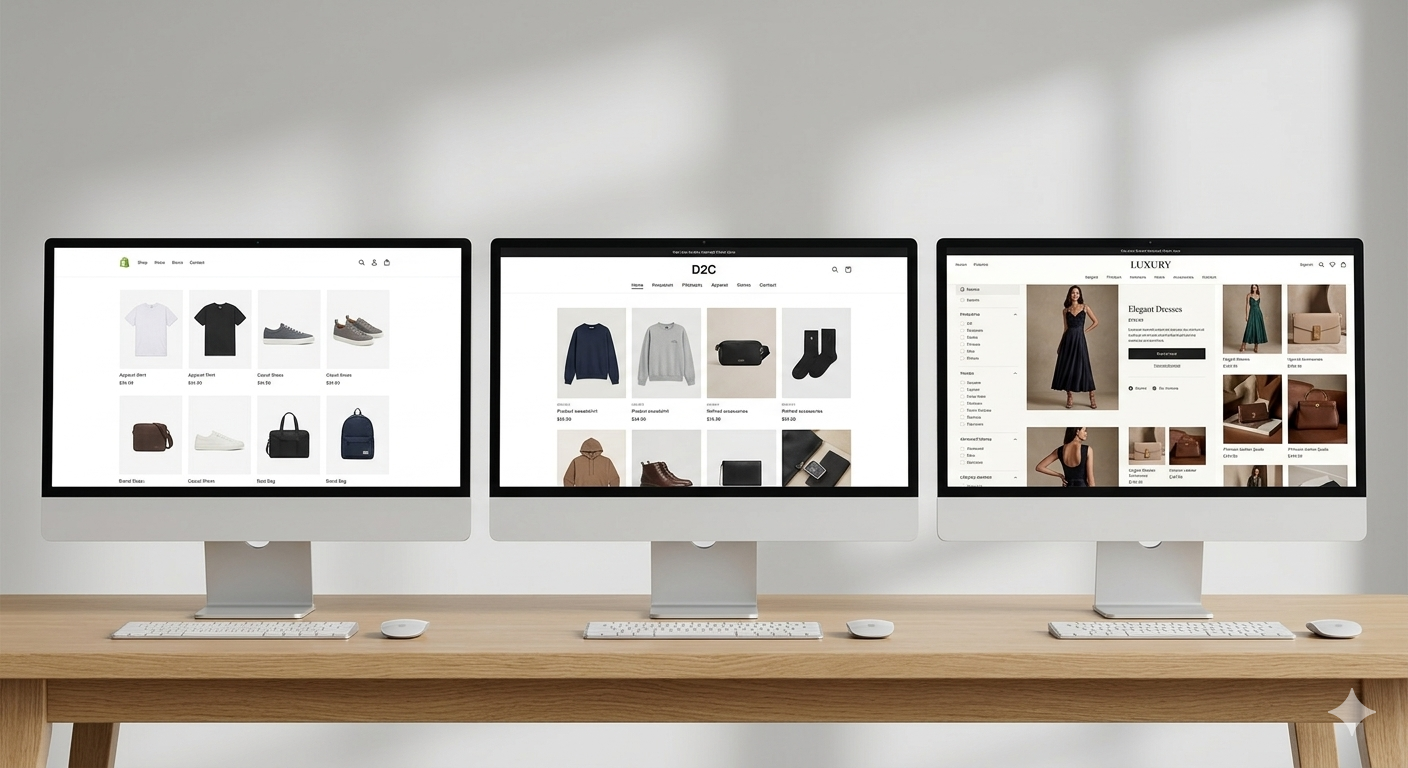
Two brands can both say “we need a Shopify store” — and still have completely different requirements. One might need a simple catalog-based store, while another might require a fully customized, conversion-focused ecommerce system with advanced integrations. That difference alone can significantly impact the overall investment.
Pricing typically changes based on factors like:
- Number of products
- Custom design vs template-based setup
- App integrations
- Checkout customization
- Performance optimization
- Third-party tools (CRM, ERP, etc.)
Beyond this, elements like user experience, mobile responsiveness, and backend workflows also play a major role in defining scope. The more tailored and performance-driven your store needs to be, the more effort goes into planning, design, and development.
We’ve seen many brands underestimate this choosing a lower-cost setup initially, only to realize it doesn’t support their growth, leading to a rebuild within months.
That’s why working with a trusted agency early makes a difference you define the right scope, avoid rework, and invest in a store that’s built to scale from day one.
Cost Breakdown Based on Store Complexity
Let’s simplify this into real-world scenarios so you can clearly see where your brand fits and what kind of investment makes sense.
1. Starter Store (₹20K – ₹50K)
This is ideal for quick launches or validating a business idea without heavy investment.
Typically includes:
- Theme setup
- Basic product upload
- Payment + shipping configuration
It gets you online fast, but it’s not built for long-term growth or aggressive scaling. Think of it as a starting point, not a final solution.
2. Growth-Focused Store (₹50K – ₹2L)
This is where most serious D2C brands should operate. The focus here shifts from just “having a store” to actually driving performance.
Typically includes:
- Custom design adjustments
- Conversion-focused layouts
- App integrations
- Speed optimization
At this stage, a reliable shopify agency india starts making a real difference — because now decisions are driven by user behavior, conversions, and scalability, not just setup.
3. Advanced / Custom Store (₹2L – ₹10L+)
Built for brands that are serious about scaling and want their store to function as a full-fledged ecommerce system.
Typically includes:
- Fully custom UI/UX
- Advanced features & integrations
- CRO-focused structure
- Automation & backend systems
At this level, your Shopify store stops being “just a website” and becomes a core growth engine — supporting marketing, operations, and long-term business expansion.

What You’re Really Paying For (Beyond Development)
Most people think they’re paying for “a website.”
You’re not.
What you’re actually investing in is how your entire ecommerce system performs from the first visit to the final purchase and beyond. The code and design are just one part of the equation.
You’re paying for:
- Strategy — how your store is structured, how products are positioned, and how users are guided through the buying journey
- User experience — how easily customers can browse, find products, and complete purchases without friction
- Conversion optimization — how effectively your store turns traffic into revenue through layout, messaging, and flow
- Performance — how fast, stable, and reliable your store is across devices, especially under traffic spikes
Beyond this, you’re also paying for the thinking behind decisions what to prioritize, what to avoid, and how to align your store with your business goals. Small improvements in these areas often lead to significant gains in revenue, which is why they matter far more than just the visual design.
That’s why two agencies can quote completely different prices and both can still be justified. One might focus purely on execution, while the other focuses on outcomes, scalability, and long-term growth.
A strong shopify partner agency india doesn’t just build a store it builds a system designed to perform, convert, and scale with your business.
Hidden Costs Most Brands Don’t Consider
This is where many budgets go wrong not in the initial build, but in what comes after.
Beyond development, you’ll also spend on:
- Shopify subscription (₹2K – ₹25K/month+)
- Paid apps (₹800 – ₹8,000+/month)
- Maintenance & updates (₹5K – ₹20K/month)
Over time, these aren’t optional they become part of your ongoing operating cost. As your store grows, you may also add more tools for marketing, analytics, automation, or inventory management, which can further increase monthly expenses.
What catches most brands off guard is that these costs scale with your business. More traffic, more features, and more complexity often mean higher recurring spend. Ignoring this early can lead to under-budgeting and operational strain later.
That’s why, as a shopify development company India, we always advise brands to think beyond just the build. Plan for the entire ecosystem the tools, the maintenance, and the continuous improvements because that’s what actually supports long-term growth.

Cheap vs Strategic Investment: What’s the Difference?
This is where most decisions go wrong not because brands don’t want to invest, but because they don’t fully understand what they’re investing in.
A cheap Shopify store usually focuses on getting live quickly at the lowest possible cost:
- Uses pre-built templates
- Ignores performance and speed
- Has weak or generic UX
- Lacks clear conversion paths
- Doesn’t convert traffic effectively
It may look decent on the surface, but it often struggles when real users start interacting with it. The result? Higher bounce rates, lower conversions, and eventually the need to rebuild.
A strategic Shopify store, on the other hand, is built with outcomes in mind:
- Designed specifically for your target audience
- Optimized for conversions at every step
- Structured to scale as your business grows
- Supports marketing campaigns and traffic efficiently
It’s not just about design it’s about how every element works together to drive revenue and performance.
We’ve worked with brands who initially chose the cheaper route, only to come back months later needing a complete overhaul. By then, they’ve spent more time, money, and effort fixing what could have been done right the first time.
That’s the real cost difference.
A good shopify developer helps you avoid that cycle by building a store that’s not just affordable upfront, but sustainable and scalable in the long run.

How to Budget Smartly for Shopify Development
If you’re planning your investment, the goal shouldn’t be to spend the least it should be to get the best return from what you spend.
Here’s how we recommend thinking about it:
- Don’t optimize for lowest cost — optimize for ROI
A cheaper build might save money today, but if it doesn’t convert or scale, it costs more in the long run. - Start with a growth-ready structure, not a temporary fix
Building something you’ll replace in a few months only delays real progress. Set a strong foundation from the beginning. - Invest based on your business stage
Early-stage brands can stay lean, but if you’re already driving traffic or planning aggressive growth, your store needs to support that. - Choose a team that understands ecommerce, not just development
The difference lies in how well your store performs not just how it looks or functions.
As a trusted agency, our focus is always the same build once, build right, and create a store that can scale with your business over time.
Final Thoughts: What Should You Expect to Invest?
If you’re building a serious ecommerce brand, Shopify development is not an expense it’s infrastructure. It directly impacts how your brand performs, converts, and scales over time.
Most growing brands in India should realistically plan:
₹80,000 – ₹2,50,000 for a solid, growth-ready store
This is typically the range where your store moves beyond just “being live” and starts functioning as a performance-driven asset. You’re investing in better user experience, stronger conversion flows, and a foundation that can support marketing and scale.
Anything below that is usually a short-term solution suitable for testing ideas, but often limiting when it comes to real growth.
Anything above that depends on how aggressively you want to scale, the level of customization required, and the complexity of your ecommerce ecosystem.
At Emerge Digital, as a trusted shopify agency in india, we approach Shopify with one goal building stores that don’t just look good, but perform, convert, and scale.
And if you’re investing in Shopify, that’s exactly what you should expect from your Shopify experts in India.

Explore more
Ecommerce Solutions for Perfume & Fragrance Brands: Why Agencies Deliver Luxury Experiences
Ecommerce Development for Skincare & Beauty Brands: How Agencies Create Scalable Solutions
E-commerce Development for Jewellery Brands: Building Trust for High-Value Purchases

About the Author
Priya, Co-Founder of Emerge Digital, is a UI/UX enthusiast with 15 years of experience. She’s passionate about crafting user-centered designs that exceed expectations, delivering meaningful and engaging digital experiences. At Emerge Digital, Priya blends her deep expertise with a commitment to client and user needs, driving innovative design solutions.