How To Improve Search Rankings ASAP
SEO rewards long-term consistency, but sometimes you need fast results. Whether you’re running an ecommerce store, a Shopify website, or a B2B business site, a few strategic SEO tactics can boost search visibility quickly while laying the foundation for long-term growth.
At Emerge Digital, we help brands implement SEO strategies that drive traffic, generate leads, and convert visitors into customers—not just clicks. Here’s your step-by-step guide to quick SEO wins, structured from on-page to off-page SEO for maximum impact.
Table of Contents
- Step 1: On-Page SEO Optimization
- Step 2: Fix Technical SEO Issues
- Step 3: Improve User Experience (UX)
- Step 4: Internal Linking & Content Structure
- Step 5: Create High-Value, Intent-Driven Content
- Step 6: Earn High-Quality Backlinks
- Step 7: Leverage Local SEO & Google Business Profile
- Step 8: Track Performance & Refine Strategy
- SEO Quick Wins FAQ
- Conclusion: Start Ranking Faster Today

Step 1: On-Page SEO Optimization
On-page SEO is the foundation of your website’s search performance. It ensures that Google understands your content, ranks it for the right queries, and delivers the right audience—people who are more likely to convert into leads or customers. Without strong on-page optimization, even the best content can get lost in the search results.
Key actions:
- Target long-tail, high-intent keywords that capture users ready to take action, for example:
- “Shopify website development for ecommerce store”
- “B2B SEO content strategy for SaaS companies”
- “Optimized product page SEO for Shopify fashion store”
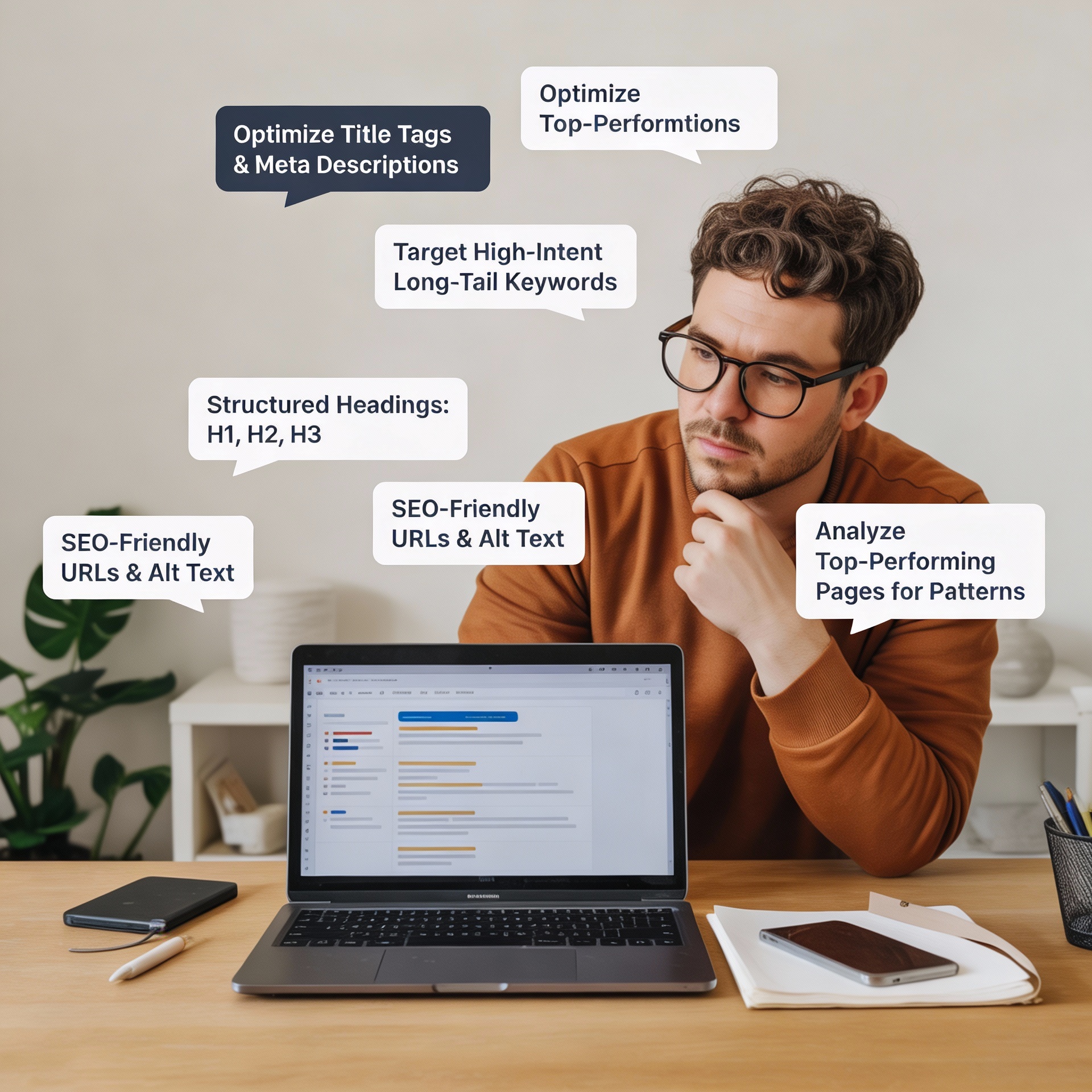
- Optimize title tags and meta descriptions by placing the primary keyword near the beginning. Make them compelling to increase click-through rates (CTR) from search results.
- Use descriptive, SEO-friendly URLs like example.com/shopify-seo-guide instead of generic ones like example.com/page1.
- Include structured headings (H1, H2, H3) to break up content, reflect search intent, and guide both users and search engines through your page.
- Add relevant images, videos, and infographics with optimized alt text that includes your target keywords to improve user engagement and accessibility.
- Ensure keyword placement feels natural—avoid stuffing. Include your primary keywords in headings, first 100 words, and throughout the content where it makes sense contextually.
Pro tip: Analyze your top-performing pages to identify patterns in title tags, headings, keyword usage, and content flow. Use these insights to replicate success across similar pages, creating a consistent on-page SEO strategy that improves rankings and drives high-intent traffic.
Step 2: Fix Technical SEO Issues
Technical SEO is the backbone of your website’s search performance. Even with excellent content and optimized on-page SEO, technical issues can prevent Google from crawling, indexing, or ranking your pages properly. A technically sound website not only helps search engines understand your site but also improves user experience, engagement, and conversions.
Key actions to tackle technical SEO:
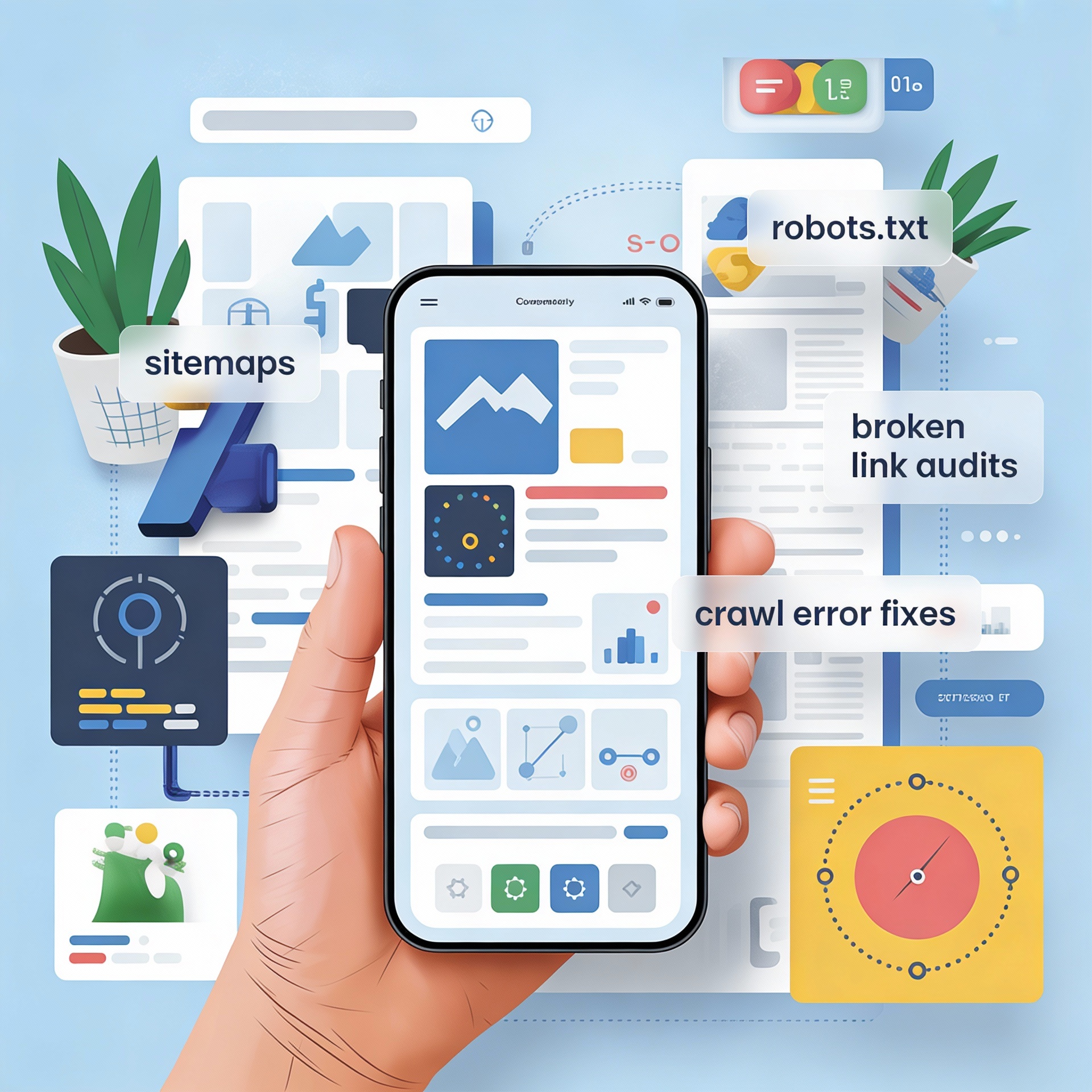
- Audit for broken internal and external links: Broken links can hurt SEO, reduce crawl efficiency, and frustrate users. Use tools like Screaming Frog, Ahrefs, or Semrush to identify and fix them.
- Improve page speed and optimize images: Compress images, enable browser caching, and minimize unnecessary scripts. Fast-loading pages reduce bounce rates and improve rankings, especially for mobile users.
- Ensure mobile-friendliness across devices: With Google’s mobile-first indexing, a responsive design and smooth mobile navigation are critical for both SEO and user experience.
- Check HTTPS, sitemap, and robots.txt: Secure websites (HTTPS) earn trust from users and Google. A proper XML sitemap and optimized robots.txt file help search engines crawl your site efficiently.
- Resolve crawl errors in Google Search Console: Identify pages returning 404s or other errors, fix redirects, and ensure all important pages are indexable.
Pro tip: Focus on high-traffic or high-converting pages first. Fixing technical issues on these pages will have the most immediate impact on rankings, user experience, and conversions. A well-optimized technical foundation also ensures that your on-page and content strategies deliver maximum SEO value.
Step 3: Improve User Experience (UX)
Google favors websites that provide a seamless and enjoyable experience for visitors. Sites that are difficult to navigate, slow to load, or cluttered tend to have higher bounce rates and lower dwell time—signals that can negatively impact your search rankings. Improving UX not only helps SEO but also guides visitors toward conversions, making every page work harder for your business.
Key areas to focus on for better UX:
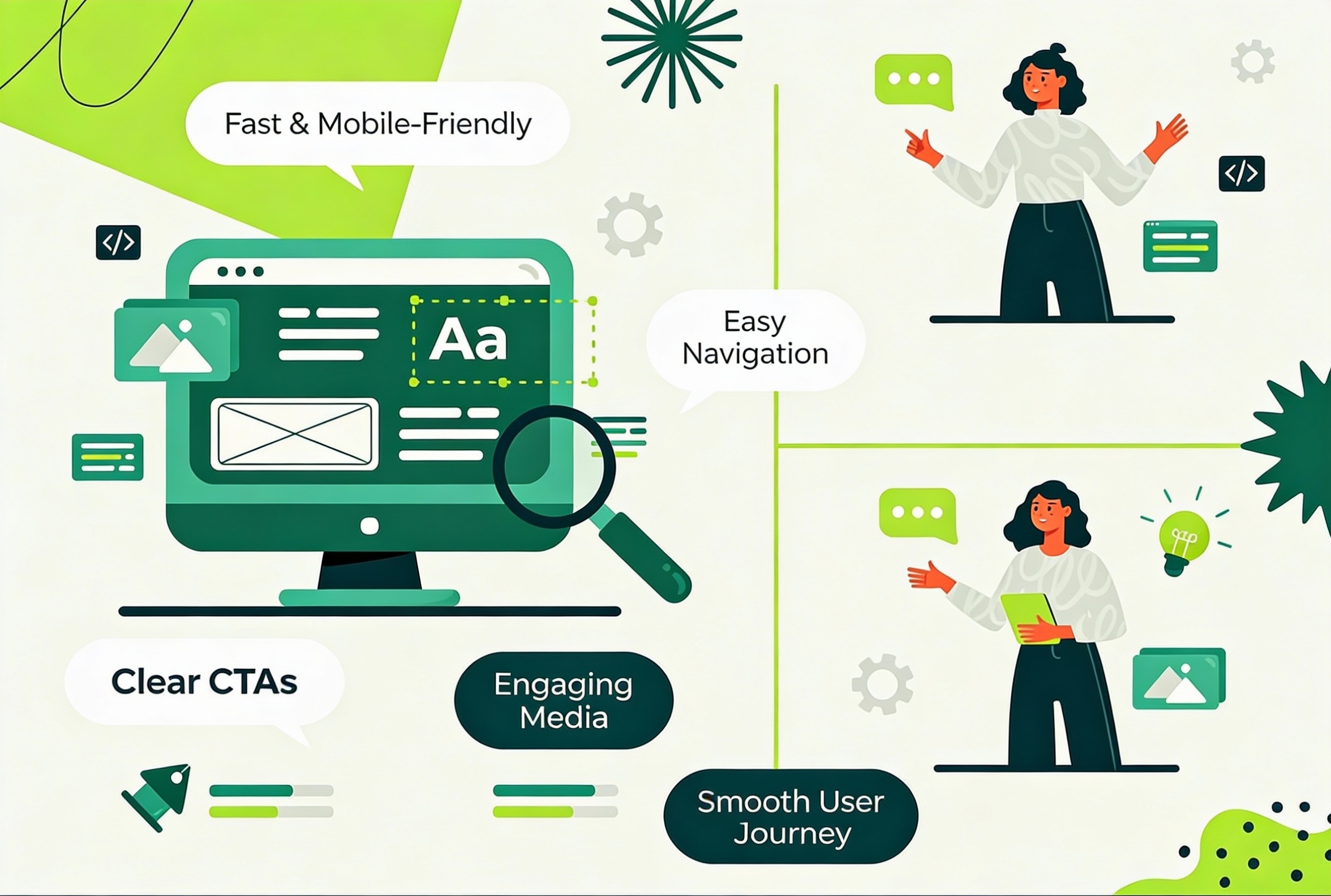
- Fast-loading, mobile-friendly design: Optimize images, enable browser caching, and use responsive design. Pages that load quickly on all devices keep visitors engaged and improve your Google Core Web Vitals scores.
- Easy-to-navigate menus and internal linking: Clear navigation helps users find what they need and guides Google bots to your important pages. Logical menus, breadcrumbs, and internal links enhance both UX and crawlability.
- Engaging media: Use images, infographics, and videos to break up text, explain complex concepts, and keep visitors interested. Multimedia also increases dwell time, which signals value to search engines.
- Clear calls-to-action (CTAs): Every page should guide users toward meaningful actions—whether it’s reading a related blog, downloading a guide, or making a purchase. CTAs should be visible, concise, and action-oriented.
Pro tip: Think of every page as a journey—educate, guide, and convert. For example, your “Shopify SEO checklist” shouldn’t just provide information; it should offer actionable steps, link to related services or products, and keep the visitor moving through your site naturally. Combining smooth navigation, engaging content, and strategic CTAs ensures visitors stay longer, explore more, and ultimately convert.
Step 4: Internal Linking & Content Structure
Internal linking helps Google understand how your content is connected, while guiding users deeper into your website. A strong internal linking strategy spreads page authority, improves crawlability, and keeps visitors engaged longer—key signals for higher rankings and better conversions.
How to implement internal linking effectively:
- Link related blogs, product pages, and category pages: This creates a natural flow and helps users discover relevant content while signaling topical relevance to search engines.
- Use descriptive, intent-based anchor text: Instead of generic links like “click here,” use clear phrases such as “Shopify SEO optimization for ecommerce stores” to reinforce keyword relevance.
- Build topic clusters around pillar pages: Create one in-depth pillar page and support it with related blogs that link back to it, strengthening topical authority.
- Add a Table of Contents (TOC) for longer pages: TOCs improve readability, user experience, and can help earn featured snippets in search results.
- Include an FAQ section with schema markup: FAQs help capture long-tail keywords and increase visibility in rich results, especially for high-intent searches.
Pro tip: When you combine a clear TOC, strategic internal links, and well-structured FAQs, you naturally guide both users and search engines through your content—boosting long-tail keyword rankings, increasing dwell time, and driving more conversions without adding friction.

Step 5: Create High-Value, Intent-Driven Content
Content is still king—but it must solve problems and capture search intent.
Strategies:
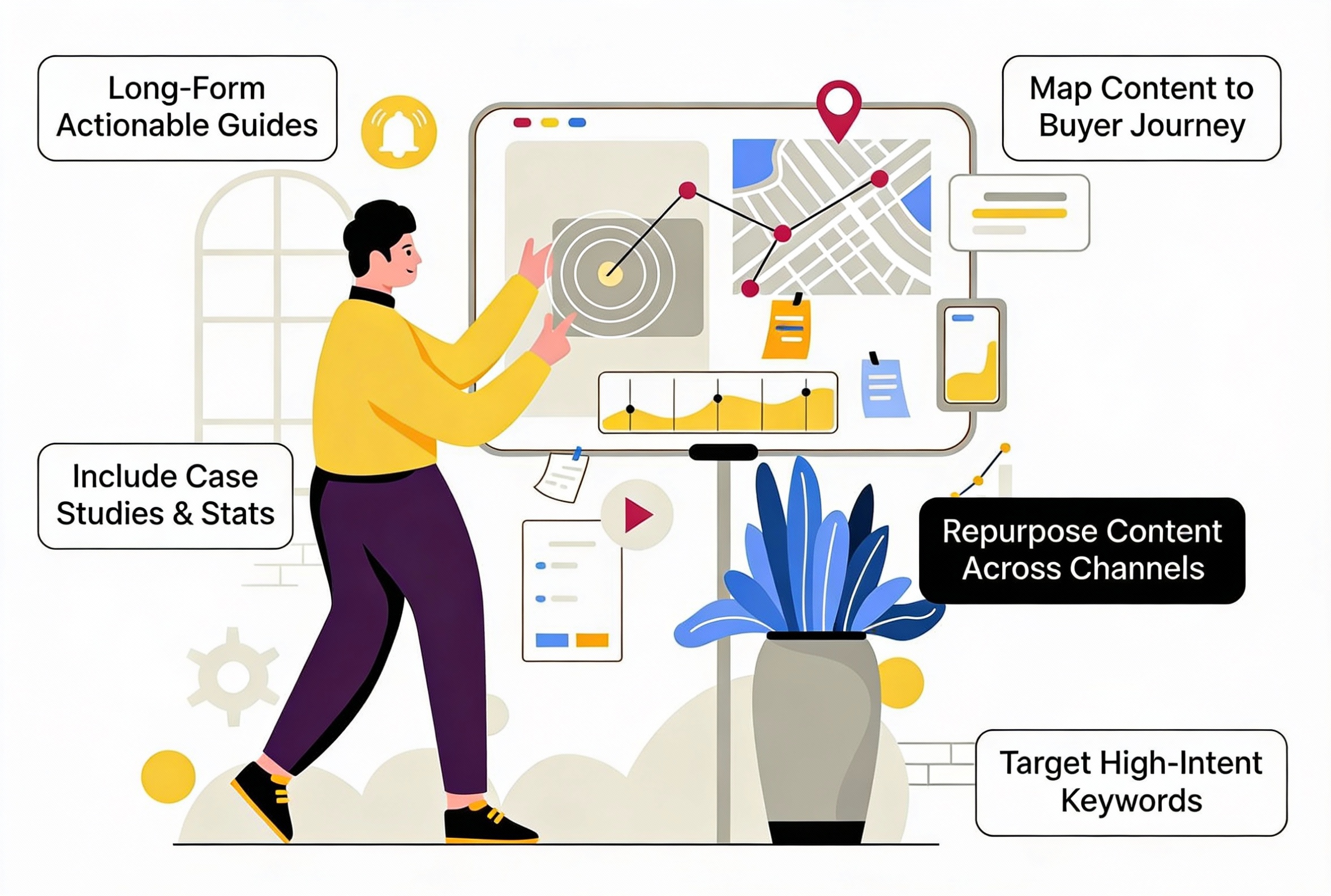
- Publish long-form, actionable guides
- Map content to the buyer journey:
- Awareness: “Top 5 Shopify SEO mistakes”
- Consideration: “Shopify SEO strategy for ecommerce stores”
- Decision: “Hire Emerge Digital for Shopify SEO optimization”
- Include case studies, stats, and actionable steps
- Repurpose content into videos, carousels, or social media posts
Pro tip: Focus on high-intent long-tail keywords that attract users ready to convert.
Step 6: Earn High-Quality Backlinks
Backlinks remain one of Google’s strongest ranking signals—but quality always beats quantity. The right links improve domain authority, trust, and visibility for competitive keywords.
How to build backlinks that move rankings:
- Create link-worthy assets: In-depth guides, SEO checklists, original research, or visual infographics naturally attract references from other websites.
- Conduct targeted outreach: Reach out to relevant industry blogs, publications, and partners with personalized pitches that add value—not generic link requests.
- Leverage brand mentions: If your brand is mentioned without a link, request attribution to turn mentions into backlinks.
- Avoid low-quality or spammy links: Irrelevant backlinks can hurt rankings and trigger algorithm penalties.
Pro tip: Track backlinks using Ahrefs, Semrush, or Google Search Console to identify which links improve rankings, referral traffic, and lead generation—then double down on what works.
Step 7: Leverage Local SEO & Google Business Profile
If you serve a specific location, local SEO can deliver some of the fastest SEO wins. A well-optimized Google Business Profile (GBP) helps you appear in Google Maps, local packs, and high-intent “near me” searches—exactly when users are ready to take action.
How to optimize your Google Business Profile:
- Claim and verify your profile: This gives you full control over updates, insights, and customer interactions.
- Maintain NAP consistency: Ensure your Name, Address, and Phone number match across your website, directories, and social platforms to build trust with Google.
- Complete every detail: Add accurate services, categories, business hours, and website links to improve relevance for local searches.
- Stay active with updates: Post offers, announcements, or recent work regularly—Google favors active profiles.
- Engage with reviews: Respond to customer reviews promptly to boost credibility and local ranking signals.
- Target “near me” and location-based keywords: For example, “Shopify ecommerce store near me” or “B2B SEO agency in Mumbai.”
Pro tip: When local SEO is paired with location-optimized landing pages, you attract users with strong purchase intent—driving more calls, form submissions, and store visits.

Step 8: Track Performance & Refine Strategy
SEO isn’t a one-time setup—it’s an ongoing growth process. Tracking performance helps you understand what’s working, what needs improvement, and where the next opportunity lies.
Key metrics to monitor consistently:
- Organic traffic and keyword rankings: Measure visibility and growth across priority pages.
- Click-through rate (CTR) and dwell time: These indicate how compelling your titles, content, and UX are.
- Leads and conversions from SEO pages: Traffic only matters when it turns into business results.
- Backlink growth and domain authority: Track link quality, not just quantity.
Pro tip: Identify your top-performing pages and replicate their structure, internal linking, content depth, and CTAs across underperforming pages. This creates a repeatable system for scaling SEO results—faster and more predictably.
SEO Quick Wins FAQ
Q: How fast can I see results?
A: Fixing broken links, optimizing title tags, and internal linking can show results in weeks. Long-term SEO growth compounds over months.
Q: Can these tactics work for Shopify stores?
A: Absolutely. Optimizing product pages, categories, and blogs with high-intent long-tail keywords delivers faster visibility.
Q: Do I need professional help?
A: Partnering with an SEO agency like Emerge Digital ensures your efforts translate into traffic, leads, and conversions, not just clicks.
Conclusion: Start Ranking Faster Today
By following this on-page → technical → UX → content → internal linking → off-page → local SEO → tracking workflow, you can see faster results while building a foundation for long-term growth.
Key takeaways:
- Optimize pages for search intent and high-intent keywords
- Build authority with content and backlinks
- Enhance UX and technical SEO
- Track results, leads, and ROI
At Emerge Digital, we combine strategy, content, and technical SEO to help you rank higher, attract the right visitors, and convert them into paying customers.
Don’t wait—start improving your search rankings ASAP today!

Explore more
Ecommerce Solutions for Perfume & Fragrance Brands: Why Agencies Deliver Luxury Experiences
Ecommerce Development for Skincare & Beauty Brands: How Agencies Create Scalable Solutions
E-commerce Development for Jewellery Brands: Building Trust for High-Value Purchases

About the Author
Priya, Co-Founder of Emerge Digital, is a UI/UX enthusiast with 15 years of experience. She’s passionate about crafting user-centered designs that exceed expectations, delivering meaningful and engaging digital experiences. At Emerge Digital, Priya blends her deep expertise with a commitment to client and user needs, driving innovative design solutions.